As America celebrates its 250th birthday in 2026, Chicago stands ready to honor the nation’s revolutionary legacy through music, history, and the spirit of innovation. From the banks of Lake Michigan to the historic neighborhoods that shaped American culture, Chicago offers visitors a unique opportunity to explore how one great city embodies the American story.
Illinois250: Chicago’s Year-Long Celebration
Throughout 2026, Chicago will participate in Illinois250, a year-long statewide celebration marking America’s 250th anniversary with events, exhibits, concerts, and performances exploring the rich history of Chicago, Illinois, and the nation. The celebrations officially kick off on July 4, 2026, but special programming will run throughout the entire year.
Music Events
International Jazz Day 2026
Chicago has been designated as the host city for the 2026 International Jazz Day World Concert, marking the 15th anniversary of the event and coinciding with America’s 250th anniversary. This event, taking place on April 30, 2026, is a particularly meaningful honor for Chicago, a city that has been a jazz mecca for over a century.
In the 1920s, jazz musicians traveled up the Mississippi from New Orleans to Chicago, where they developed the distinctive “Chicago style” of jazz. This style emphasized solos, improvisation, and big band arrangements with a faster, more rhythmic sound.
America 250: A Musical Journey
The Chicago Symphony Orchestra will present a month-long celebration honoring America’s 250th birthday throughout June 2026. The curated programs reflect the country’s resilience, creativity, and musical traditions, featuring performances from the Chicago Symphony Orchestra, guest artists, and jazz ensembles.
Highlights include performances spanning Copland and Gershwin to Wynton Marsalis’s Liberty Symphony with the Jazz at Lincoln Center Orchestra, culminating in a live performance of Star Wars: A New Hope with full orchestra.
Navy Pier Fireworks & American History Exhibits
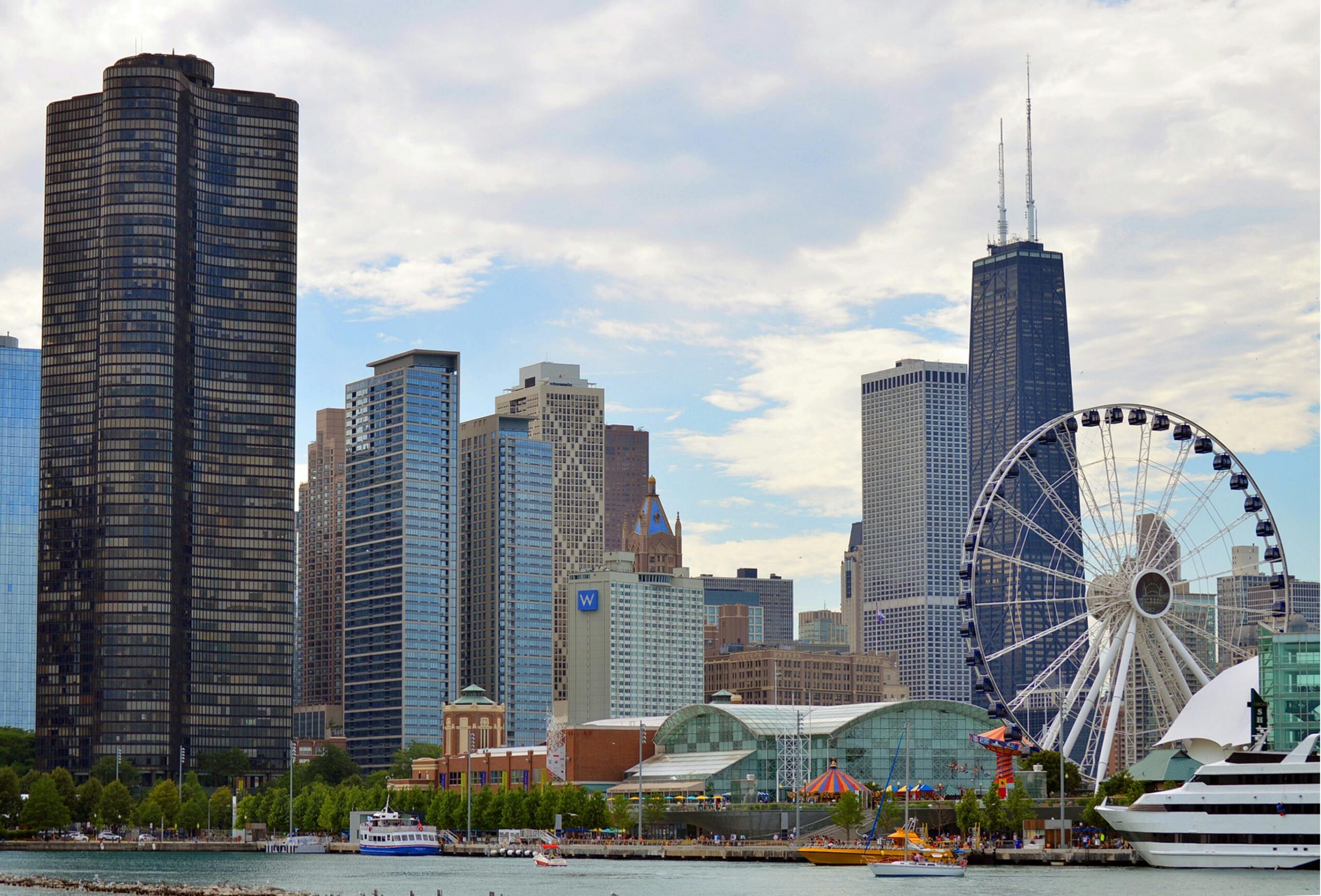
Chicago will celebrate with Navy Pier fireworks displays and American history exhibits throughout the year, offering spectacular views over Lake Michigan and opportunities to explore the nation’s founding story.
Explore Chicago’s History
Chicago History Museum
The Chicago History Museum is the premier destination for understanding Chicago’s story and its connection to American history. With over 22 million items in its collections, the museum offers extraordinary artifacts and immersive experiences.
Key exhibitions include Chicago: Crossroads of America, which delves into Chicago’s development and features nearly 600 objects documenting the people and events of the past 200 years. Objects on display include a chunk of the original Fort Dearborn and the first locomotive to operate in Chicago.
The Abraham Lincoln Installation highlights Lincoln’s election in 1860, his leadership during the Civil War, and his tragic assassination, along with an adjoining Portrait Gallery that provides a glimpse of the Chicago that Lincoln knew. The museum houses extraordinary Lincoln artifacts, including Lincoln’s deathbed from the Petersen House, furniture from the room where he died, and clothing that he and Mary Todd Lincoln allegedly wore the evening of his assassination.
The collection also contains the table on which General Robert E. Lee signed his 1865 surrender to General Ulysses S. Grant at the McLean House in Appomattox, Virginia—an official act that ended the American Civil War.
Facing Freedom in America: Starting January 6, 2026, this exhibition will be closed for updates for the America’s 250th celebration and will reopen in July 2026. The exhibition focuses on eight American conflicts over freedom from the 1850s to the 1970s, using artifacts, images, and interactive displays to explore everything from women’s suffrage to Japanese internment.
Additional exhibits include one on Emmett Till and the Civil Rights Movement, A House Divided, which explores slavery and the Civil War, and The Great Chicago Adventure, a film featuring the Great Chicago Fire and the World’s Columbian Exposition.
The Chicago History Museum is located at 1601 North Clark Street in Lincoln Park.
Fort Dearborn
While the physical fort no longer stands, Fort Dearborn’s story is central to Chicago’s founding and America’s expansion. Fort Dearborn was built in 1803 along the Chicago River and named after Henry Dearborn, a Revolutionary War hero who served as U.S. Secretary of War.
The fort was constructed after the Treaty of Greenville in 1795, when Native Americans ceded six square miles at the mouth of the Chicago River to the United States. This strategic location would become the foundation for the great city of Chicago.
The fort’s most dramatic chapter came in 1812 during the War of 1812, when a battle occurred on August 15, resulting in a complete Potawatomi victory, after which the fort was burned. A second fort was rebuilt in 1816 and served until 1837.
Fort Dearborn Site: The location is now a Chicago Landmark at the southern end of the DuSable Michigan Avenue Bridge, part of the Michigan-Wacker Historic District. Visitors can view historical markers and imagine the wilderness that once existed here.
Military History & Memorials
Chicago honors America’s military heritage through numerous sites and museums, including the Pritzker Military Museum & Library, Soldier Field (home to the Chicago Bears), the Vietnam Veterans Memorial Plaza, the Elks National Veterans Memorial, the Grand Army of the Republic Memorial Hall, the Rosehill Cemetery and Civil War Museum, and the Victory Monument (Bronzeville).
DuSable Black History Museum and Education Center
Founded in 1961, this is the oldest museum in the United States dedicated to the study and conservation of African American history, culture, and art. The museum explores the essential role African Americans have played in shaping America’s story, from the Revolutionary era through the Civil Rights Movement to today.
Pullman National Monument
Step back in time to the 1880s in Pullman, a historic district on the south side of Chicago and one of the first planned industrial communities in the United States. Named a National Monument by President Barack Obama, Pullman’s unique design and striking architecture tell the story of American labor, industrialization, and the African American Pullman Porters who played a crucial role in the Civil Rights Movement. The A. Philip Randolph Pullman Porter Museum nearby celebrates the inspiring history of Black labor in the United States.
Route 66 Centennial: Double Celebration
2026 is more than just America’s 250th. It’s also the 100th anniversary of Route 66. Throughout 2026, Chicago will celebrate the Route 66 Centennial with special events and pop-ups honoring the city’s place as the official beginning of the legendary route.
Known as “The Mother Road,” Route 66 officially begins in downtown Chicago and stretches more than 2,400 miles to the Pacific Coast. Explore local landmarks along the route and experience this quintessentially American journey.
Indigenous Chicago
Chicago is home to one of the largest urban Native American communities in the United States, with about 65,000 Native American residents representing some 175 different tribes. The city honors this heritage through museums, monuments, and public art.
Before Fort Dearborn, before Chicago became a city, this land was home to Potawatomi, Miami, and other Indigenous peoples. Jean Baptiste Point du Sable, a French-speaking trader and settler of African descent, built a prosperous farm and trading post near the mouth of the Chicago River in the 1780s, directly across from where Fort Dearborn would later stand. Many historians view du Sable as the founder of Chicago.
Understanding America’s 250 years means acknowledging the thousands of years of Indigenous history that preceded it, and Chicago’s museums and cultural centers work to share both traditional art and contemporary Indigenous perspectives.
The Spirit of Independence
As the nation celebrates its 250th anniversary, Chicago offers a living connection to the American experiment in democracy, innovation, and diversity. From the jazz clubs where American music was revolutionized to the neighborhoods where immigrants built new lives, from Fort Dearborn’s frontier outpost to the soaring skyscrapers that defined modern cities, Chicago embodies the restless American spirit..
Check individual websites throughout 2026 for the latest programming, special exhibitions, and celebration details as America’s 250th anniversary year unfolds.