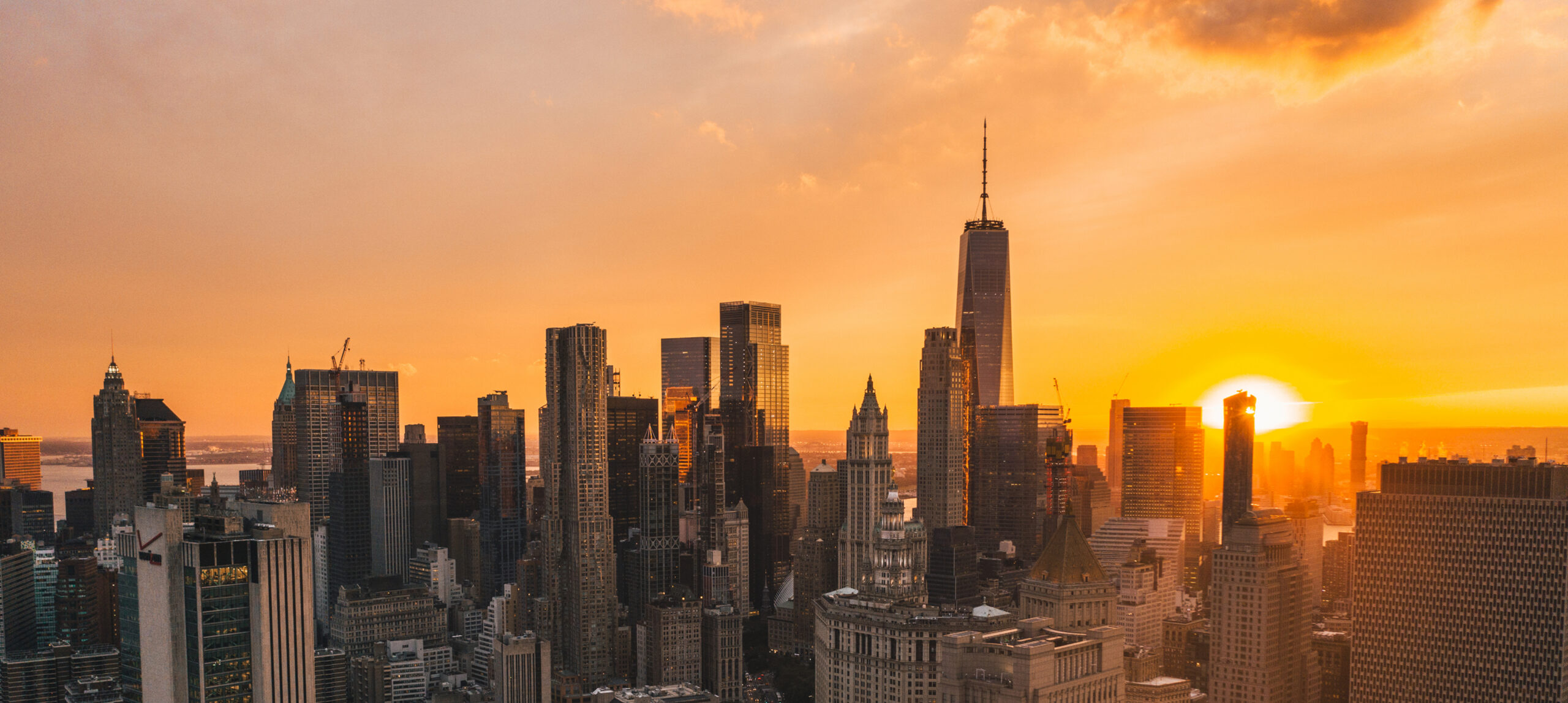
New York City pulls off a lot of spectacular things, but few of them stop traffic quite like Manhattanhenge. Twice a year, the setting sun aligns perfectly with Manhattan’s east-west street grid, flooding the urban canyons with a blaze of golden light that turns everyday intersections into something that feels almost ancient in its drama. If you’ve never witnessed a sunset in Manhattan quite like this one, 2026 gives you four chances to do exactly that.
What Is Manhattanhenge — And Why Does It Happen?
Manhattanhenge, also called the Manhattan Solstice, occurs because of a quirk in the city’s urban planning history. When commissioners drew up Manhattan’s street grid in 1811, they oriented it approximately 29 degrees clockwise from true north. That rotation creates a perfect solar alignment twice each year, once in late May and once in mid-July, when the sun sets precisely along the east-west corridor of the grid.
Astrophysicist Neil deGrasse Tyson coined the term “Manhattanhenge” by analogy with Stonehenge, where ancient stones align with the solstice sun. The comparison holds up: both phenomena turn architecture into a calendar, and both draw crowds willing to crane their necks and hold their breath for a few glorious minutes of golden hour.
The 2026 Dates You Need to Know
Mark these dates on your calendar now. The American Museum of Natural History confirms that the 2026 Manhattanhenge effect occurs on four evenings. The half-sun dates, when the sun sits partially below the horizon, framed by the buildings on either side, fall on Thursday, May 28, at 8:14 p.m. and Sunday, July 12, at 8:21 p.m.
The full-sun dates, when the entire solar disk sits just above the horizon in perfect alignment, fall on Friday, May 29, at 8:13 p.m. and Saturday, July 11, at 8:20 p.m. Most photographers and first-timers prefer the full-sun evenings for the most dramatic golden hour view. Arrive at your chosen spot at least 45 minutes early, as crowds build fast and the ideal position fills up quickly.
The Best Viewing Spots
The prime streets for viewing Manhattanhenge are 14th, 23rd, 34th, and 42nd Streets; wide east-west corridors that offer clear sightlines all the way to New Jersey across the Hudson. The key is to position yourself as far east as possible while keeping that western view open.
14th Street sits about a 14-minute walk from Arlo SoHo and delivers one of the more accessible golden hour views, with a broad, open streetscape that works well for photography.
23rd Street, roughly a 7-minute rideshare away, offers a solid mid-Manhattan perspective with good depth.
34th Street, near the Empire State Building, is one of the most iconic and photogenic viewing corridors in the city, about a 10-minute rideshare from Arlo SoHo. The building itself adds a dramatic backdrop as the light turns amber.
42nd Street remains the most popular spot of all, with the Chrysler Building and the Tudor City Overpass adding architectural grandeur to the frame. Plan for a 12-minute rideshare from Arlo SoHo to reach this stretch with time to spare.
For a completely different perspective on the Manhattan Solstice, head across the water to Hunter’s Point South Park in Long Island City, Queens, about a 20-minute rideshare from Arlo SoHo. From here, you watch the entire Manhattan skyline glow as the sun drops behind it, with the East River reflecting the light below. It’s one of the most underrated Manhattanhenge spots in the city and significantly less crowded than the Midtown streets.
Tips for Photographing the Golden Hour
NYC is one of the most photographed cities in the world, but there are few opportunities like Manhattanhenge. Capturing the perfect image of this unique event requires some preparation.
Manhattanhenge lasts only a few minutes at peak alignment. Stand in the center of the street, carefully, given traffic, and face west. A wide-angle lens captures the full sweep of the canyon effect, while a longer focal length compresses the buildings and the sun into a tighter, more dramatic composition.
Cloudy skies can ruin the shot entirely, so check the forecast and have a backup date ready. The half-sun evenings often produce softer, more diffused light that some photographers actually prefer.
Book Your Stay at Arlo SoHo
With Manhattanhenge viewing spots accessible by foot or a quick rideshare in multiple directions, Arlo SoHo puts you in the ideal position to chase the light wherever it takes you. Book your stay at Arlo SoHo and experience one of New York City’s most breathtaking natural phenomena from the perfect downtown home base.